
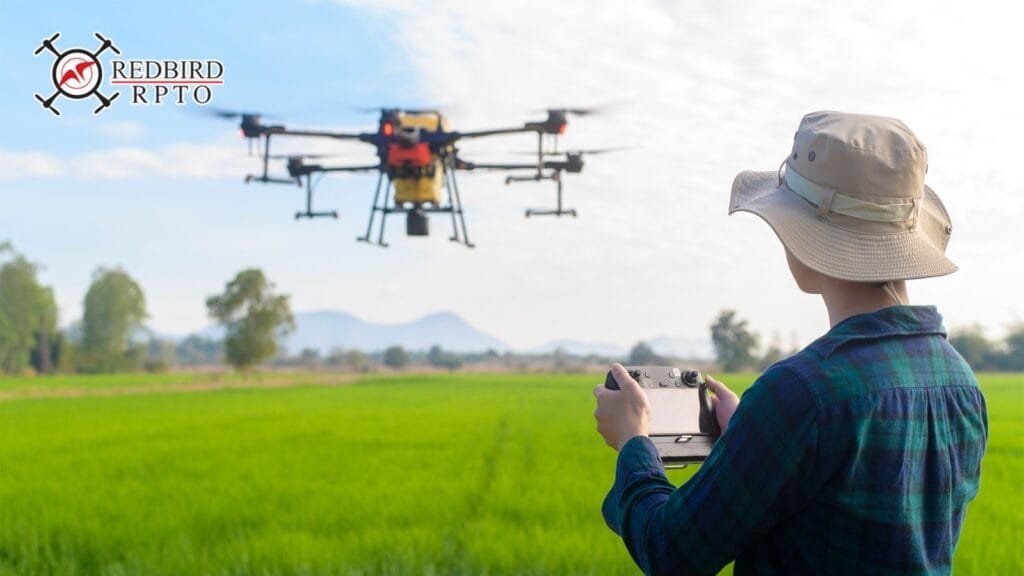
If you have ever watched a drone rise smoothly into the sky and wondered what it takes to fly one professionally, you are not alone. Many learners begin with curiosity, a few questions, and a sense of excitement mixed with uncertainty. You may be asking yourself whether the field is right for you, how challenging the training might be, or what the job actually looks like in real life. These questions form the perfect starting point.
Drone pilot training is designed to guide beginners and enthusiasts along a clear path, from a basic understanding to confident flying. As you read, imagine how each stage relates to your own plans. The more clearly you picture your goals, the easier it becomes to choose the right path.
DGCA Drone License Process
The first step in becoming a certified pilot is the licensing process. Many learners believe it is complicated, but once you understand the flow, it becomes easier to navigate.
Your journey begins at a DGCA-approved Remote Pilot Training Organisation. Before you enroll, the institute verifies your age and basic documents. Once admitted, you begin classroom sessions, simulator practice, and supervised flying. All of this forms the foundation of DGCA drone pilot training.
After completing the programme, the institute uploads your details to the DGCA Digital Sky Platform. This leads to an online assessment conducted under DGCA rules. Once you pass, the Digital Sky system issues your remote pilot certificate. This certificate acts as your license to fly drones for commercial purposes.
The process may feel long when described step by step, but each stage ensures that pilots understand their responsibilities. A clear approach is important because drones operate in shared airspace, and safety rules protect both pilots and the public.
Drone Pilot Salary in India
Many learners want to know about income before they commit to drone pilot training. Salaries vary according to field, experience, and project complexity, but a general idea helps set expectations.
Entry-level professionals usually support survey operations, wedding shoots, marketing content, or agricultural mapping. In these areas, salaries tend to start at a modest but stable range. As you gain experience, you move toward specialised work such as topographic mapping, industrial inspections, and multispectral crop analysis.
One steady benefit is that the field is still expanding. When you complete DGCA drone pilot training, you stand at the edge of a job market that continues to open new roles. As industries learn the value of aerial data, skilled pilots gain more opportunities and, in turn, stronger earning potential.
Drone Pilot Exam Syllabus
The DGCA exam syllabus is designed to prepare you for real-world flying. It covers theory, rules, safety, and basic operation skills. Understanding the syllabus early helps you approach the training with confidence.
You study airspace structure, flight rules, meteorology, navigation, and privacy regulations. These topics may remind you of aviation subjects, and that is because drone operations share many principles with traditional flying.
The syllabus also covers emergency procedures. You learn how to handle loss of GPS, sudden weather changes, battery issues, or system warnings. Simulator sessions help you practise these situations in a safe environment before you try them outdoors.
The best part of DGCA drone pilot training is that each topic is explained in a clear and practical way. You are not expected to memorise complex theories. Instead, you learn how to make sound decisions while flying. This steady understanding gives you confidence during operations and during the DGCA assessment.
Types of Drone Training
The training you receive can vary depending on your goals. Although the DGCA sets core requirements, different institutes provide additional modules that strengthen your skills.
Basic remote pilot training prepares you for multirotor drones used in mapping, photography, and general operations. This forms the foundation of most commercial drone work.
Advanced training focuses on specialised fields. If you want to work in agriculture, you might learn pesticide spraying techniques and multispectral imaging. If you prefer surveying, you study mapping software, ground control points, and data interpretation. For filmmaking, you practise smooth shots, coordinated camera movement, and creative framing.
Some institutes also provide operations-focused sessions that teach you how to plan flights, handle clients, and maintain equipment.
The wide range of options shows how much the industry has grown. When you enroll in DGCA drone pilot training, you can choose a path that suits your interests rather than following a single fixed route.
How to Become a Drone Pilot?
- Identify your purpose, whether photography, mapping, agriculture, or inspection
- Enroll in a DGCA-approved training organisation for valid certification
- Attend all classroom, simulator, and outdoor flying sessions
- Practise regularly to build confidence in different conditions
- Complete your course and submit documents for the DGCA assessment
- Clear the assessment to obtain your remote pilot certificate
- Apply for jobs or begin freelance work based on your area of interest
- Continue learning as new tools and techniques enter the industry
How Redbird RPTO Supports Your Progress?
If you want training that keeps safety, clarity, and practical learning at the centre, Redbird RPTO offers a dependable path. The institute provides structured lessons, experienced instructors, and thorough simulator practice. You learn through real flying hours and steady guidance rather than rushed sessions. Their team explains procedures in a patient and clear manner so that you understand each step instead of memorising it. If you seek a training environment that builds genuine skill and confidence, Redbird RPTO can help you begin your career with strong support and long-term direction.